TrustRadius: an HG Insights company

Kanban Tool

Score8.6 out of 10

28 Reviews and Ratings

What is Kanban Tool?

Kanban Tool is a visual project management application based on Kanban that helps companies visualize workflow, track project progress, analyze and improve business processes. Some key features include: time tracking and time reports, real-time collaboration and Kaban analytics.

Categories & Use Cases

Media

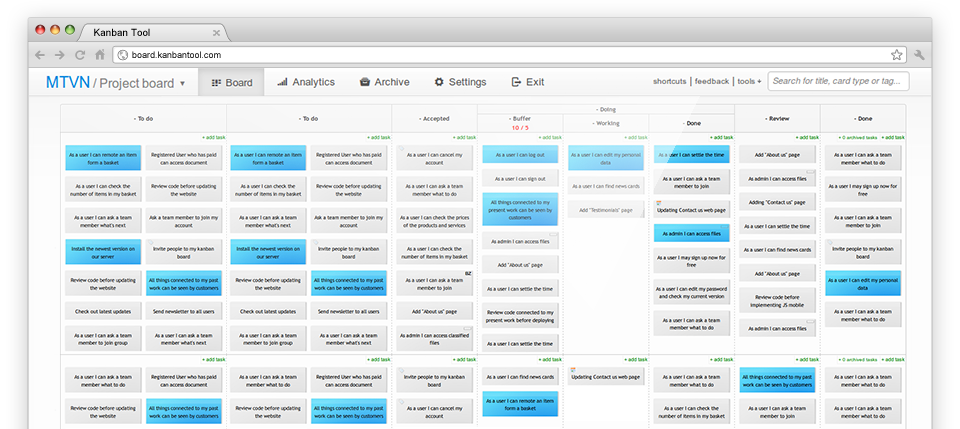
Visual project management tool - Kanban board from Kanban Tool.
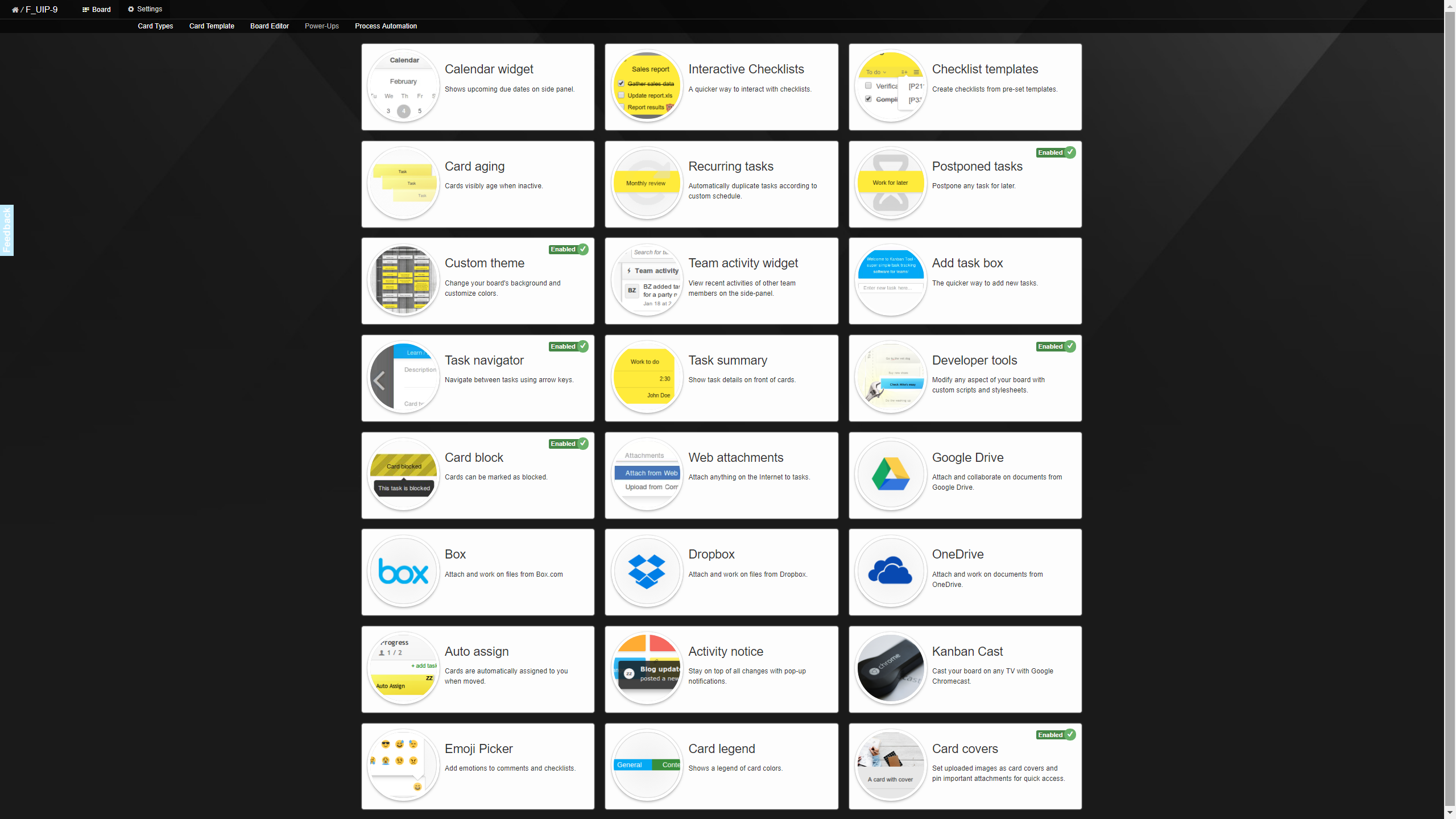
The collection of Power-Ups form Kanban Tool
Kanban Tool board example, with My Work widget, Recurring and Postponed Tasks visible in the side panel. User's own background selected.
Kanban Tool  board example. Default light theme applied.
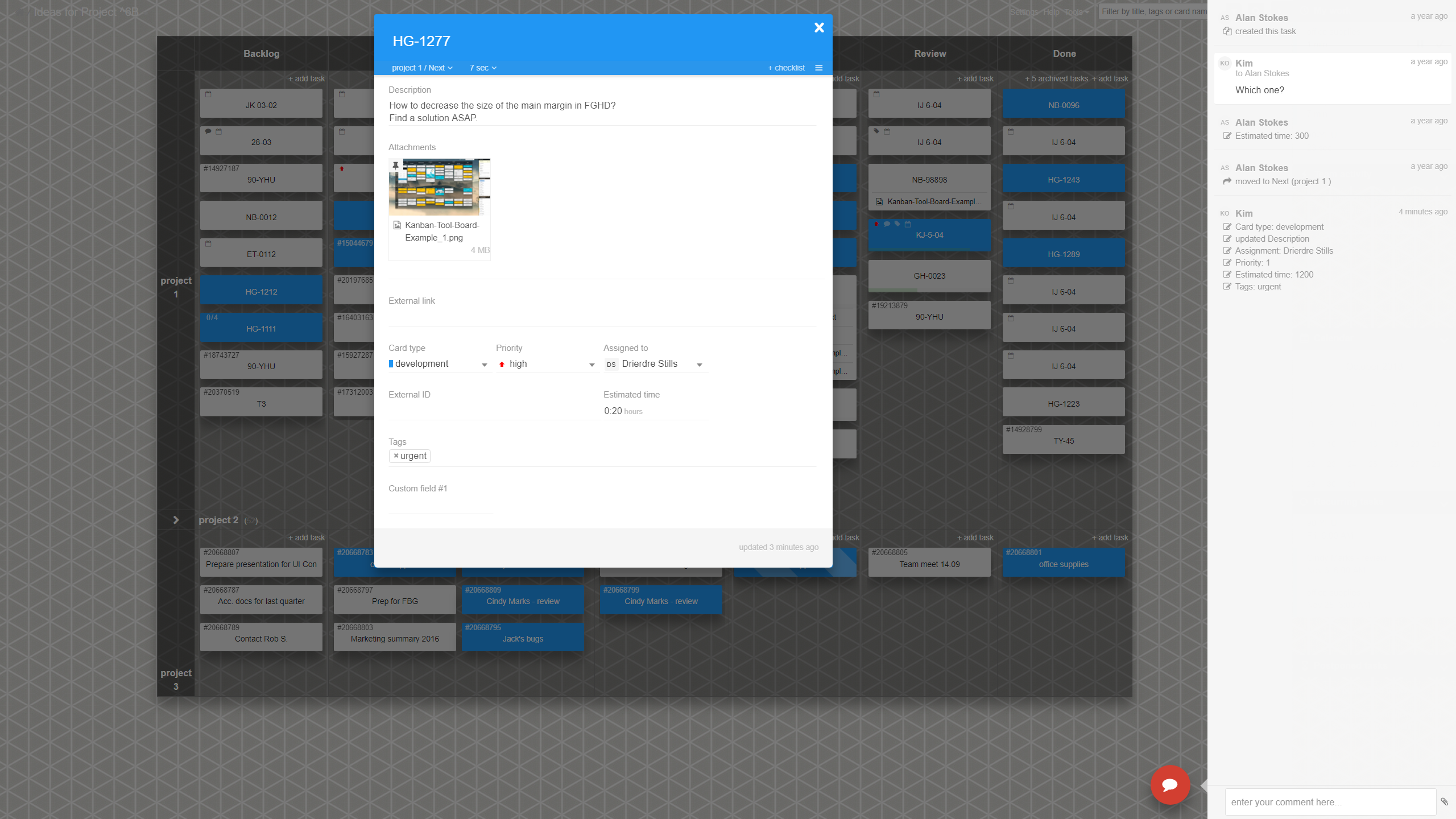
Kanban Tool - an open card view, with comments in the side panel. The choice of what fields show on cards is with the user.
Kanban Tool's free Power-Ups  for user's own activation.
Kanban Tool on various supported devices.
Kanban Tool Analytics - Lead & Cycle Time diagram shown.

1 / 8

Top Performing Features

  • Integration with accounting software

    Real-time, two-way sync with accounting or financial software to facilitate project and financial reporting

    Category average: 7.6

  • Task Management

    This includes the ability to plan, track, collaborate and report on tasks.

    Category average: 9

  • Mobile Access

    Mobile access is the ability to access the software from a smartphone or tablet.

    Category average: 7.7

Areas for Improvement

  • Budget and Expense Management

    Budget and expense management provides the capability to track all expenses by employee or department and link them back to department. It also enables hourly rates to be set.

    Category average: 7.7

  • Project & financial reporting

    Ability to analyze project and financial data based on custom criteria to gather insights and improve business performance

    Category average: 7.8

  • Gantt Charts

    Gantt charts are charts that show tasks or events along the y-axis displayed against time along the x-axis.

    Category average: 7.9

Kanban Tool

Use Cases and Deployment Scope

I use Kanban Tool for personal organization. I use it to list all my tasks, and keep up with them. One of the most important features for me is the time tracking. After a day, I can visualize how I used my time and how much I worked in each task.

Pros

  • It is simple and modular, so you can always add functionalities when you need them, but it doesn't get overcrowded when you don't need them.

Cons

  • It could improve the recurring card feature, giving more flexibility of how we can set the periodicity.

Return on Investment

  • Kanban Tool helps me keep my tasks visible and manage my time.

Usability

Kanban Tool Review 91924

Use Cases and Deployment Scope

We use the (the scope) the Kanban Tool for tasks that need to be completed with our organizations. Often times for assigning tasks to who suppose to research a topic, create a presentation, send out marketing material and so on. The problems it address is knowing who suppose to do these tasks.

Pros

  • Give reminders
  • Can add attachments
  • Can add a link to a task
  • Add dependencies

Cons

  • cost lowered per number of users
  • integrations to more tools
  • better free tier

Return on Investment

  • Enhanced Collaboration
  • Reduction in overtime transaction cost
  • Increased Productivity

Usability

Alternatives Considered

Azure DevOps Services

Other Software Used

Azure DevOps Services

High Value Application

Use Cases and Deployment Scope

We use Kanban Tool to manage and have visibility for all of our clients. Each client is at different points within our process. The app lets us view our entire process and all of our clients on one convenient board. We can then drill down with each client card to identify tasks and follow up.

Pros

  • Visual designation
  • Ease of use and access
  • Connects with outlook to provide current tasks due today
  • Real-time updates

Cons

  • I like that the app continues to evolve

Return on Investment

  • Cost effective
  • Helped to define our process

Alternatives Considered

Trello

See at once what to do and where to go....

Use Cases and Deployment Scope

I do the whole project management for a Data migration project of a customer from an individual legacy system to SAP S4/Hana. Means Cards for data objects, for processes, swim lanes for departments like SD, Purchase, or Finance. I use it for control, status, and documentation. I use one for the whole project, and one for the actual status of each data object.

Pros

  • A card for each data object documents and controls the whole migration process
  • Cards for subtask like meetings, workshops and so on
  • Organization of daily work by email integration

Cons

  • the cards can be designed very individually, only the design is fixed.

Return on Investment

  • cuz the project is still running, there is an answer at the moment not possible..

Other Software Used

Navisite Productivity and Collaboration (Microsoft Office 365 and MDM), MindManager, SAP S/4HANA

Simple and Effective

Use Cases and Deployment Scope

PRO: Very simple and easy to start and use. Cards are very basic but can be customized and "powered up!"

CON: Boxes and cards should have a better/smarter resize. I'm using the lowest Zoom but since I have a lot of boards, cards, swim lanes, it can get crowded. However, it was the only product I've found so far that allowed me to do this.

OVERALL: I shifted all of our projects and tasks into Kanban Tool. Information that was scattered across emails, other PM software, and ticket trackers is now consolidated in several boards, with a simple and minimalist view of everything.

Pros

  • Overview of all cards, even from multiple lanes and boards.
  • Can be customized from extremely simple, to highly informational.
  • Support is great!

Cons

  • File upload/integration.
  • Card resizing.
  • User/account management.

Return on Investment

  • Better communication and organization of ongoing projects.
  • We are a very small team, with many areas to work on. Having everything in one system gives us a lot of visibility.
  • Greatly reduced costs from using other tools that were much more expensive.

Alternatives Considered

Kanbanize