
Glenn Burnside
Executive Vice President of Operations & Strategy
Chose Jira Service Management

| Product | Rating | Most Used By | Product Summary | Starting Price |
|---|---|---|---|---|
 Jira Service Management | N/A | Jira Service Management (formerly Jira Service Desk, now including features from the former Mindville Insight, acquired by Atlassian in June 2020) is a service desk software that is purpose-built for IT, service, and support teams. The software provides everything IT and support teams need out-of-the-box for service request, incident, problem and change management. Jira Service Management integrates seamlessly with Jira Software so that IT and development teams can work better together. Users… | $0 per month | |
 ServiceNow IT Service Management | N/A | Built on the ServiceNow Now Platform, the IT Service Management bundle provides an agent workspace with knowledge management, and modules supporting issue tracking and problem resolution, change, release and configuration management. | N/A |
| Jira Service Management | ServiceNow IT Service Management | |||||||||||||||
|---|---|---|---|---|---|---|---|---|---|---|---|---|---|---|---|---|
| Editions & Modules |
|
| ||||||||||||||
| Offerings |
| |||||||||||||||
| Entry-level Setup Fee | No setup fee | No setup fee | ||||||||||||||
| Additional Details | — | ITSM Pro and ITSM Enterprise also are available with optional "Plus" add-ons. These include AI Agents, an AI Agent Studio, and other features that augment the capabilities of the platform using AI Virtual Agents to automate tasks. | ||||||||||||||
| More Pricing Information | ||||||||||||||||
| Jira Service Management | ServiceNow IT Service Management | |
|---|---|---|
| Considered Both Products |  Jira Service Management Glenn Burnside Executive Vice President of Operations & Strategy Chose Jira Service Management  Gabriel Krahn ECM Consultant Chose Jira Service Management Jira SD is between Tivoli and Service Now. In this particular case, we are using JIRA SD as the customer asked us to integrate some things with products he already had, such as Confluence, where he kept all the information we could use.  Nekeisha Beaton Helpdesk Technician III Chose Jira Service Management Jira is open source, so it is more versatile than ServiceNow. Jira allows you to create more dashboards, projects, and features than ServiceNow.  Gerardo David Denis Herrera Gerente de Sistemas y Comunicaciones Chose Jira Service Management It really is not established above other tools of the market, it is quite similar to its similar ones in the market. JIRA is used depending on multiple factors such as cost and size of the organization but I do not see a real competitive advantage with respect to other similar …  Milan Shah Technical Architect Chose Jira Service Management We considered Freshdesk but considering the tight integration with Jira and Confluence, this was the best bet. |  ServiceNow IT Service Management  Arturo Serradilla Ortiz Lead IT Project Manager Chose ServiceNow IT Service Management ServiceNow offers a robust CMDB than other market alternatives, that is our key parameter as the organization complexity requires a detailed CMDB setup to minimaze impact of frequent changes that are being executed. A unified platform that can scale with our complex global …  Gardiner Jones Windows Systems Administrator Chose ServiceNow IT Service Management Originally designed for software bug tracking, JIRA is much easier to use than ServiceNow. It lacks the CMDB power of ServiceNow, but can be adapted for not only ticketing, but change management as well. I worked with both SerivceNow at my previous employer who tossed it in …  Jesse Bickel, MS - PMP Asst. Director of Network Operations Chose ServiceNow IT Service Management ServiceNow seems to be able to scale as large as you would like it to and outpaces the competition as far as ease of licenses and growth. While it is clunky it really allows you to drill down to the smallest workflow or permissions to really allow the system to build around …  Phanindra reddy Bommu RPA UiPAth and BluePrism developer Chose ServiceNow IT Service Management |
| Jira Service Management | ServiceNow IT Service Management | ||||||||||||||||||||||||
|---|---|---|---|---|---|---|---|---|---|---|---|---|---|---|---|---|---|---|---|---|---|---|---|---|---|
| Incident and problem management |
| ||||||||||||||||||||||||
| ITSM asset management |
| ||||||||||||||||||||||||
| Change management |
|
| Jira Service Management | ServiceNow IT Service Management | |
|---|---|---|
| Small Businesses |  Agiloft Service Desk (discontinued) Score 9.0 out of 10 | Agiloft Service Desk (discontinued) Score 9.0 out of 10 |
| Medium-sized Companies | Agiloft Service Desk (discontinued) Score 9.0 out of 10 | Agiloft Service Desk (discontinued) Score 9.0 out of 10 |
| Enterprises |  ManageEngine ServiceDesk Plus Score 9.3 out of 10 | ManageEngine ServiceDesk Plus Score 9.3 out of 10 |
| All Alternatives | View all alternatives | View all alternatives |
| Jira Service Management | ServiceNow IT Service Management | |
|---|---|---|
| Likelihood to Recommend | 7.9 (85 ratings) | 9.4 (80 ratings) |
| Likelihood to Renew | 10.0 (1 ratings) | 9.0 (13 ratings) |
| Usability | 8.3 (10 ratings) | 9.0 (13 ratings) |
| Availability | - (0 ratings) | 10.0 (1 ratings) |
| Performance | - (0 ratings) | 9.0 (1 ratings) |
| Support Rating | 9.1 (25 ratings) | 7.3 (22 ratings) |
| Online Training | - (0 ratings) | 1.0 (1 ratings) |
| Implementation Rating | - (0 ratings) | 10.0 (3 ratings) |
| Product Scalability | - (0 ratings) | 10.0 (1 ratings) |
| Jira Service Management | ServiceNow IT Service Management | |
|---|---|---|
| Likelihood to Recommend | Atlassian
| ServiceNow
|
| Pros | Atlassian
| ServiceNow
|
| Cons | Atlassian
| ServiceNow
Dr Gardiner Jones Windows Systems Administrator |
| Likelihood to Renew | Atlassian
 Chinthaka Jayawardane Head-Senior Manager - Global IT Operations | ServiceNow
|
| Usability | Atlassian
| ServiceNow
|
| Reliability and Availability | Atlassian No answers on this topic | ServiceNow
 Michael Sypes Programmer Analyst |
| Performance | Atlassian No answers on this topic | ServiceNow
Michael Sypes Programmer Analyst |
| Support Rating | Atlassian
| ServiceNow
|
| Online Training | Atlassian No answers on this topic | ServiceNow
|
| Implementation Rating | Atlassian No answers on this topic | ServiceNow
 Randall Hodgins Senior ITSM Solutions Architect |
| Alternatives Considered | Atlassian
 Gary Smolyak Development Operations Systems Administrator | ServiceNow |
| Scalability | Atlassian No answers on this topic | ServiceNow
Michael Sypes Programmer Analyst |
| Return on Investment | Atlassian
| ServiceNow
|
| ScreenShots | Jira Service Management Screenshots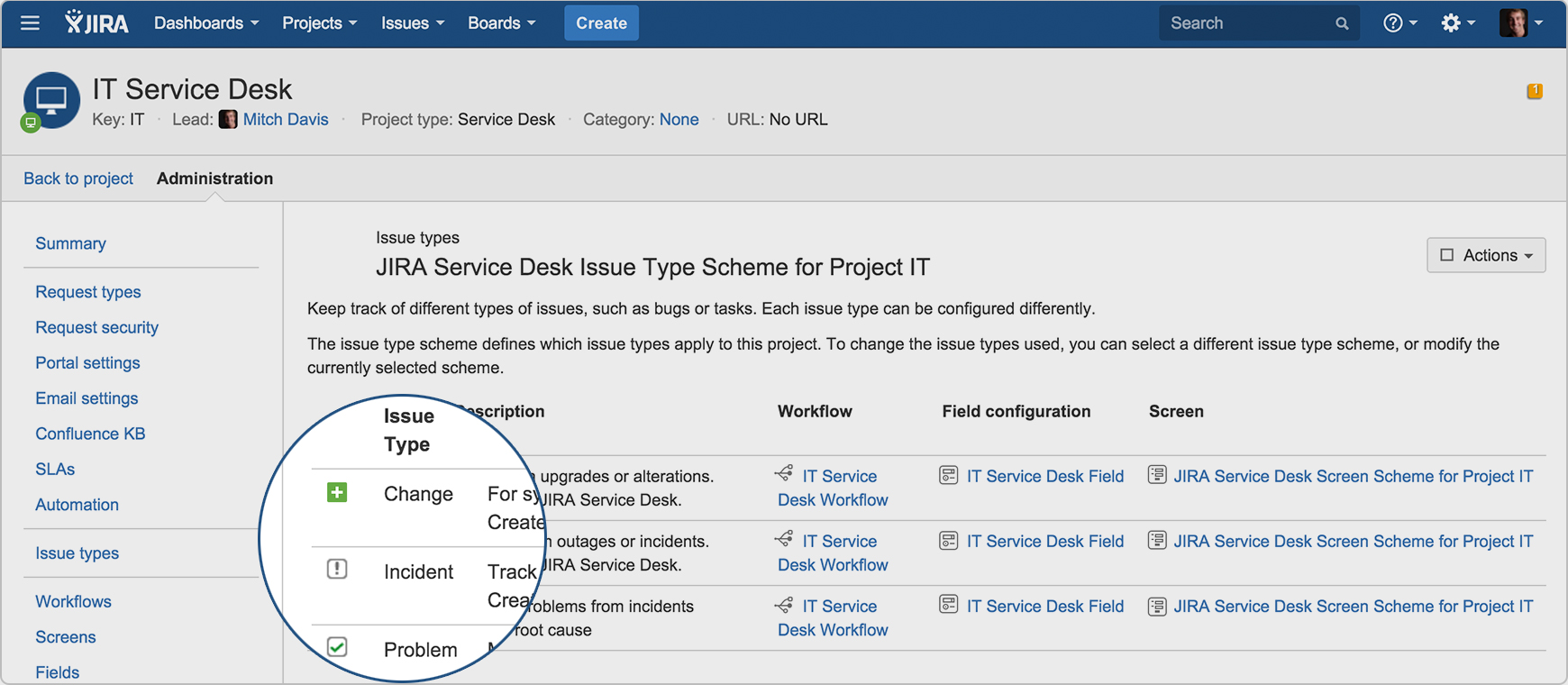  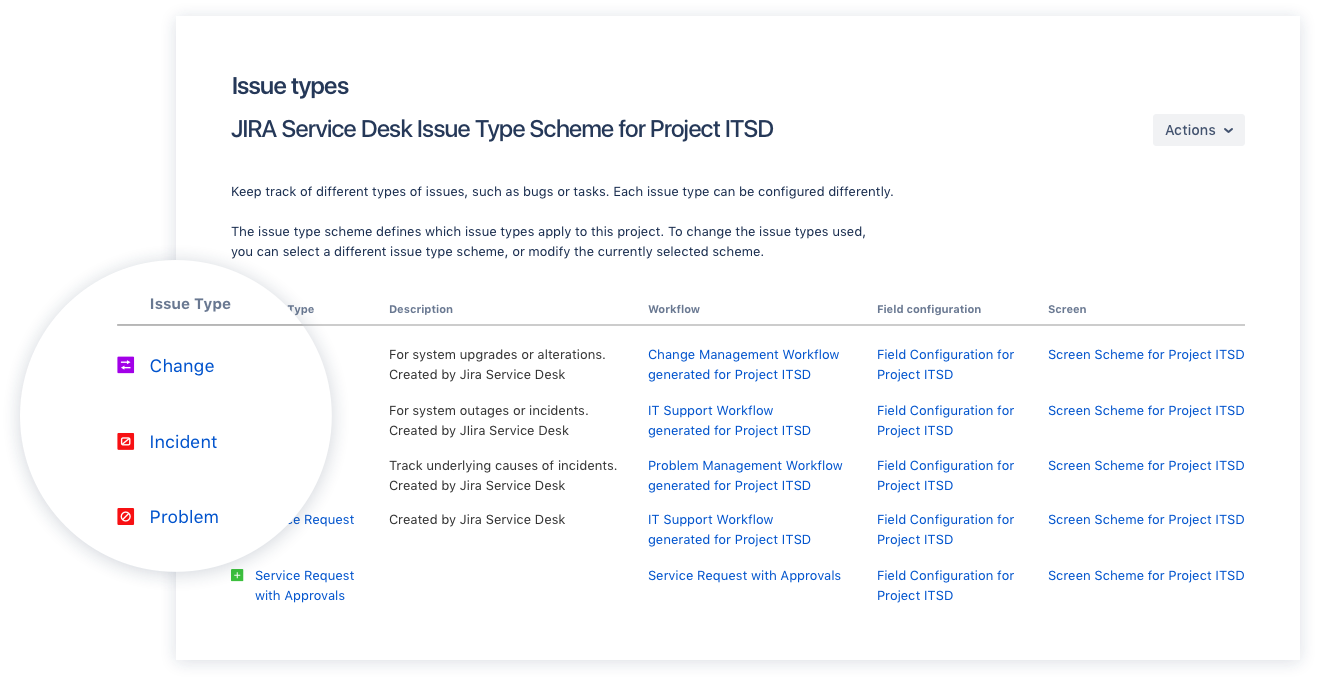  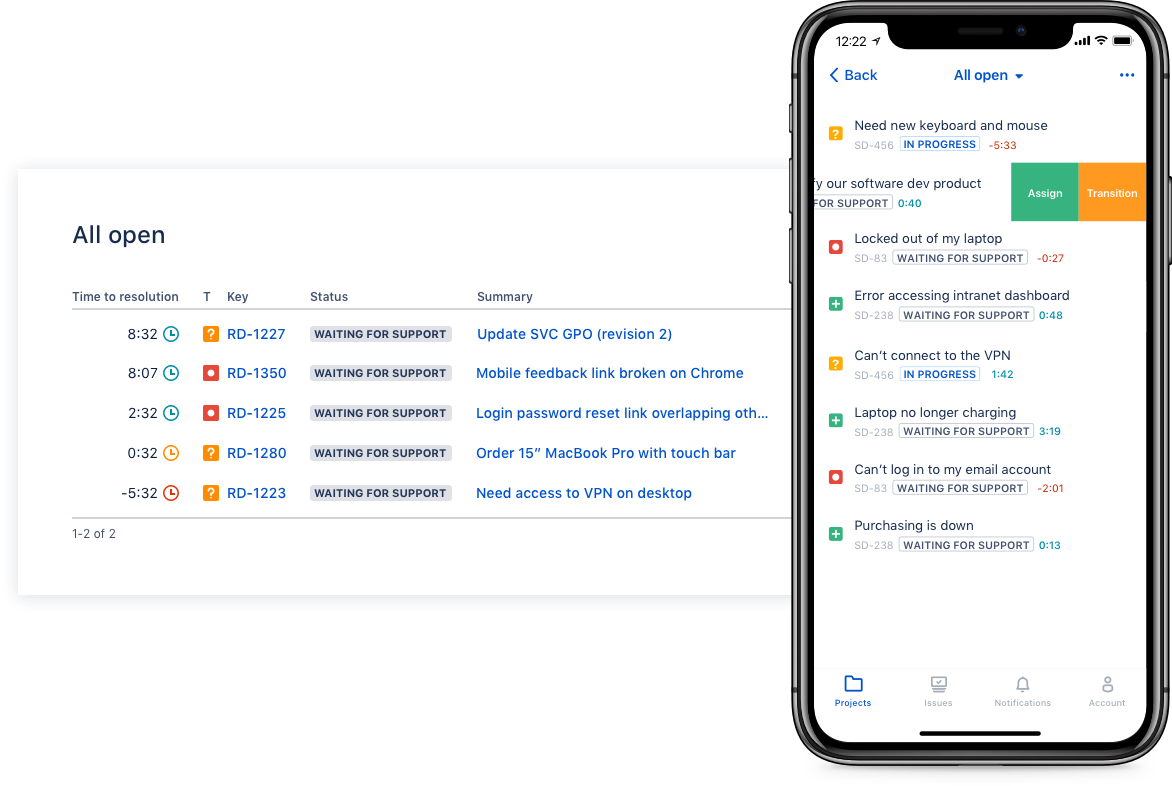  | ServiceNow IT Service Management Screenshots    |