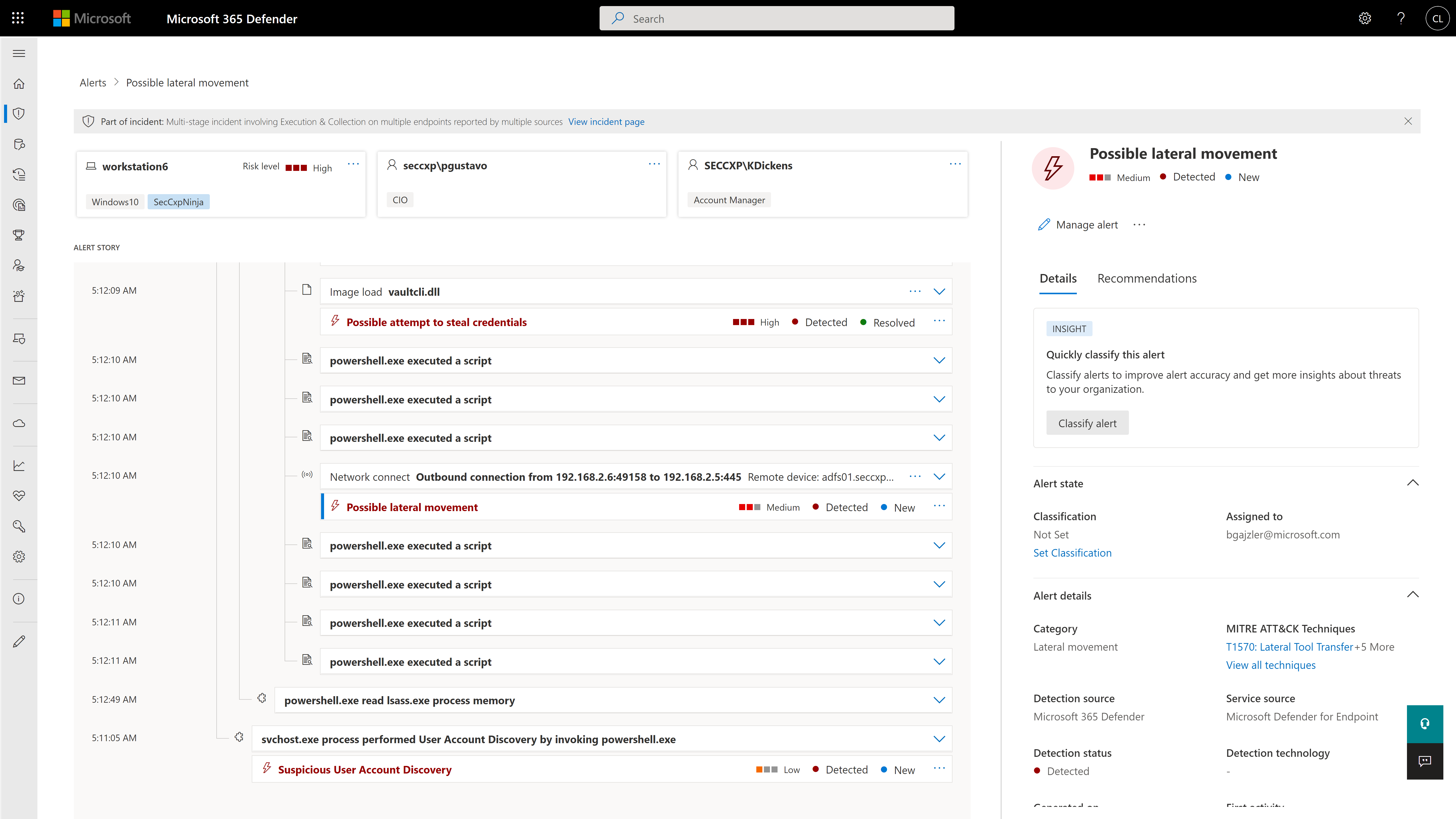
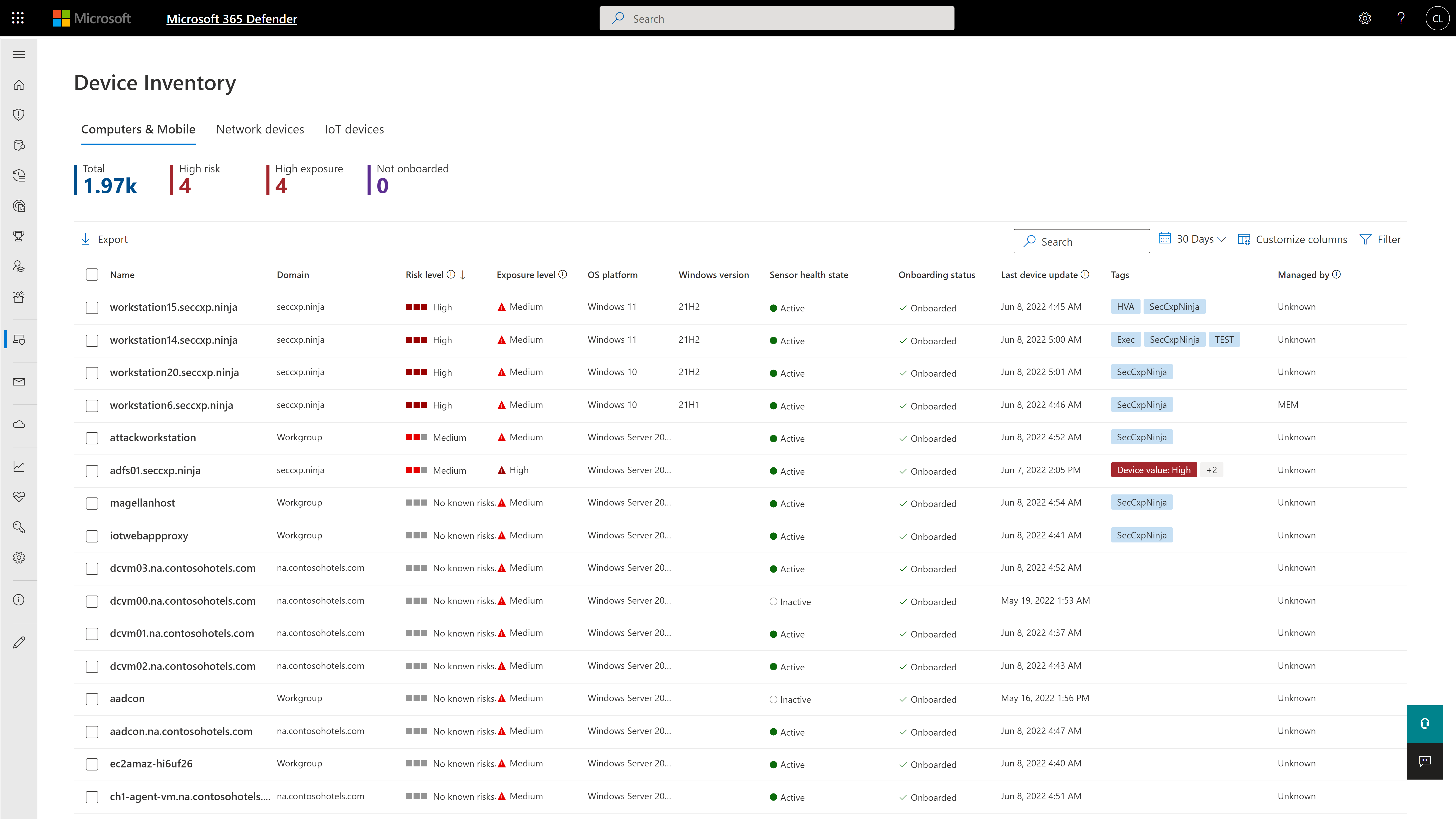
Microsoft Defender for Endpoint (formerly Microsoft Defender ATP) is a holistic, cloud delivered endpoint security solution that includes risk-based vulnerability management and assessment, attack surface reduction, behavioral based and cloud-powered next generation protection, endpoint detection and response (EDR), automatic investigation and remediation, managed hunting services, rich APIs, and unified security management.
$2.50
per user/per month
Microsoft Entra ID
Score 8.9 out of 10
N/A
Microsoft Entra ID (formerly Microsoft Azure Active Directory or Azure AD) is a cloud-based identity and access management (IAM) solution supporting restricted access to applications with Azure Multi-Factor Authentication (MFA) built-in, single sign-on (SSO), B2B collaboration controls, self-service password, and integration with Microsoft productivity and cloud storage (Office 365, OneDrive, etc) as well as 3rd party services.
I have been working with customers that they are transitioning from Sentinel One, CrowdStrike to Defender for Endpoint, right? So I think it's because they see the value in the product and also they see how much they can save in terms of the cost for companies because they …
Microsoft Defender gels very well with the rest of the M365 suite of products. The security Dashboard gives one view for Email Security and Endpoint Security. The security events can be generated while getting integrated with SIEM solution or can use its own SIEM offering.
For us, it was a natural evolution of our use of active directory. As we went from on-premises to the cloud, this was an easy extension of our authentication infrastructure. We looked at other products from Oracle, so Oracle ID, Oracle Identity Management. We looked at pink …
Well, it's natively integrated with all Microsoft Stack, so it comes very handy when you need to, for example, use it for Intune Association, et cetera, so it's very handy.
Our company ecosystem is microsoft based and using Microsoft Entra ID is very easy, The integration is much easier for microsoft environment as compared to other.
We haven't really tried any other modern directory services, with the exception of on-prem AD, so not really got a comparison. Although Okta (SSO) was tested a couple of years ago by another department but it didn't gain traction. And we used to use SecureAuth (MFA) but it …
As much as its easy to compare AzureAD to others, as much as it gets complicated. AzureAD is a direct choice for business relying on the Microsoft ecosystem of products and services, the integration between AzureAD, Windows and Windows Server is phenomenal, and Microsoft keeps …
It is well integrated with the Microsoft Admin center providing a quick way to find everything you're looking for. However, if there is a problem that needs addressed, you may have to click through a few more pages to find the solution. It will definitely let you know what's going on in your environment.
It is especially good for organizations that are otherwise in the Microsoft ecosystem (Microsoft 365 applications). Microsoft Entra ID is really well supported sign-in method in various SaaS-applications and they often have step-by-step guides how to deploy the SSO with Microsoft Entra ID. It's less suitable for organizations that might use other productivity tools than M365 or do not have Windows-based computers.
One, it's crazy lightweight, so compared to some of the competitors that we also have used with our security services, it's really lightweight and so I don't have a lot of overhead on the system that it's running on.
Single Sign-on helps ease the user experience, allowing users to avoid typing multiple passwords.
The identity and management are straightforward to use and easy to connect to other applications, as well as third-party applications.
The support of remote work. Nowadays, many people work from home and need to access their accounts. Microsoft Enterprise ID gives secure access to the company data.
So the fact that Defender for Endpoint still works with signatures is actually, I don't know, a little difficult for us because, I mean, since Microsoft trusts those signatures, you can easily inject code. And we've done it many times. To show that you can inject code through vulnerabilities like CV 2013, 99, and 33 but still keep the signature. So because of the trust of those signatures, the malware just kind of slides into the environment without Defender knowing. That's the first part. The second part is that the behavioral analysis is not precisely its Prime. It's not Defender's best capability for endpoints. So, Defender does not identify all behaviors considered by other EDRs in the market.
Probably the most primary thing is just the interface itself. It's frequently changing and so oftentimes we kind of have to go back and redocument our processes for our IT staff because the steps that they would take to perform a task one month. Now it's a totally different staff, new dashboard, even a new name for the product or the feature. So it would be nice if that stuff was a little bit more consistent.
Cost add-ons for Security features is nickel and diming the process to keep pace with cybercrime. Limited Education budgets require us to be more pro-active in finding cost-effective measures to protect our devices, staff and students. Defender is a strong, well-featured product that is pricing itself out of the education market
MSFT Entra ID has been essential for managing our geographically dispersed team. We're confident that it will scale with us as grow, and we'll be able to take advantage of additional security and ID management features as they become necessary. Being able to centrally manage our user access from anywhere with a small support team is such a relief.
It offers multiple security features and integrates well with Microsoft ecosystems. A workflow for threat detection, investigation, automated remediation, and a centralized dashboard is an added advantage. This application is mainly designed for experienced users; new users may feel challenged.
I mean it's pretty good. It is click, click. I mean, oftentimes I can go to the expert or layer two support to get help. Suddenly I go to them. So it has to be pretty useful to be honest. I do a lot of, and there's a lot of, you could do research quickly online to find out how to do certain things. I think that's the only thing we can improve to in terms of kind of a best practice path is setting up it. But because I'm it profess of tons of years in co-management services, I can figure it out. But for others they may not be able to figure it out. You still need an IT person of course to translate all of that. But to me pretty straightforward. I come from the days of directory from 2008, 2000, Microsoft server 2000.
Microsoft Defender for Endpoint chugs along just fine no matter what we throw at it and what systems it's running on. It doesn't take up a lot of resources either, so that's welcomed.
The first time I tried to onboard my macOS endpoints to MDE I struggled for quite a bit. I had to reach out to Microsoft's MDE support team. The tech was very helpful in walking me through the steps during a screen share session
I have not needed to engage support for anything at this time. I have been able to find the answers either online or in a knowledgebase. I tried to skip the question but it would not let me, so I rated a 9 based on other interactions with Microsoft support I have had
Deployment was handled by our team here and everything went pretty smoothly. We did have a few hiccups in our test group, but that only took a bit to get ironed out.
Make sure you use a good partner. Our implementation was a bit longer and more problematic than we expected. Our partner got it done, but, in my opinion, some of their inexperience and staffing issues were evident.
Defender is far easier to deploy and manage than Sophos and tends to work without as many issues. The threat assessment portal provides an in-depth view of the organization's security posture, whereas Sophos only shows the patching status of the PCs. We did need Intune to get many of the control features (disabling USB drives) that Sophos offered out of the box.
We've used other Microsoft products and we've also used some standalone products, like each application you can have its own identity, so we've looked at some of those too, but we try to use the Entra ID as much as possible because it offers a wider range of reliability.
Microsoft Professional Services' technical knowledge is appreciable as consultants design the solution as per customer requirements. Mapping of features per user specifications and assisting Customer IT engineers to implement so they can manage and administer the services.
I think it's had positive. It's enabled us to make authentication easier and more streamlined across the organization from frontline workers to back office workers.
It's allowed us to really adopt authentication policies and methods that suit that user and their work environment.