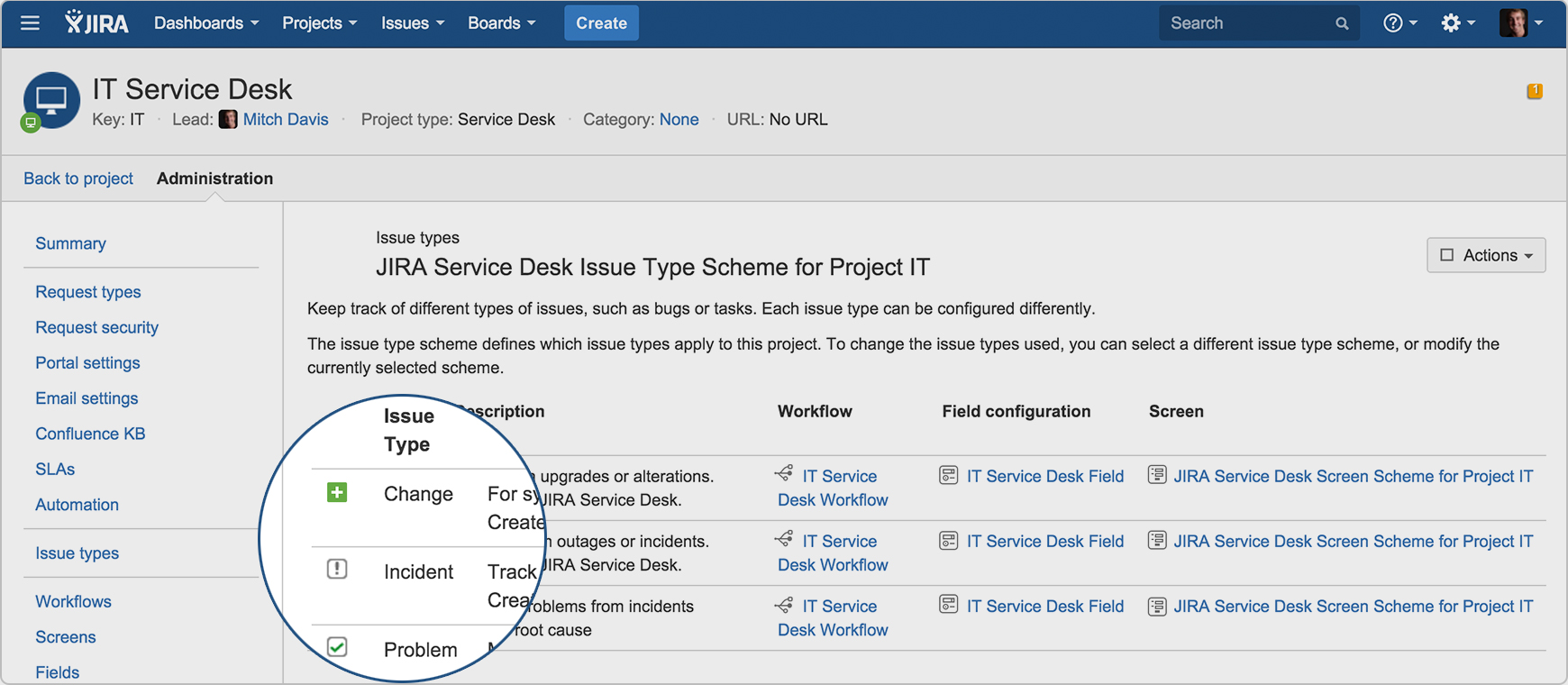
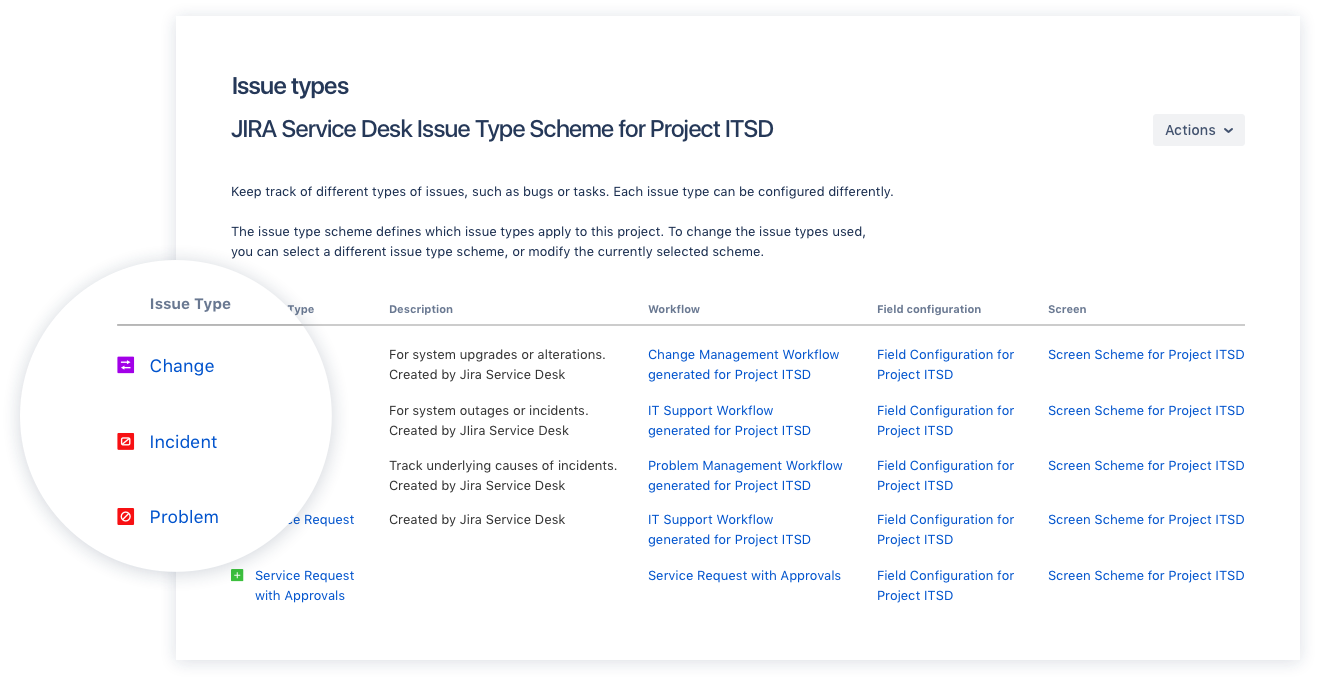
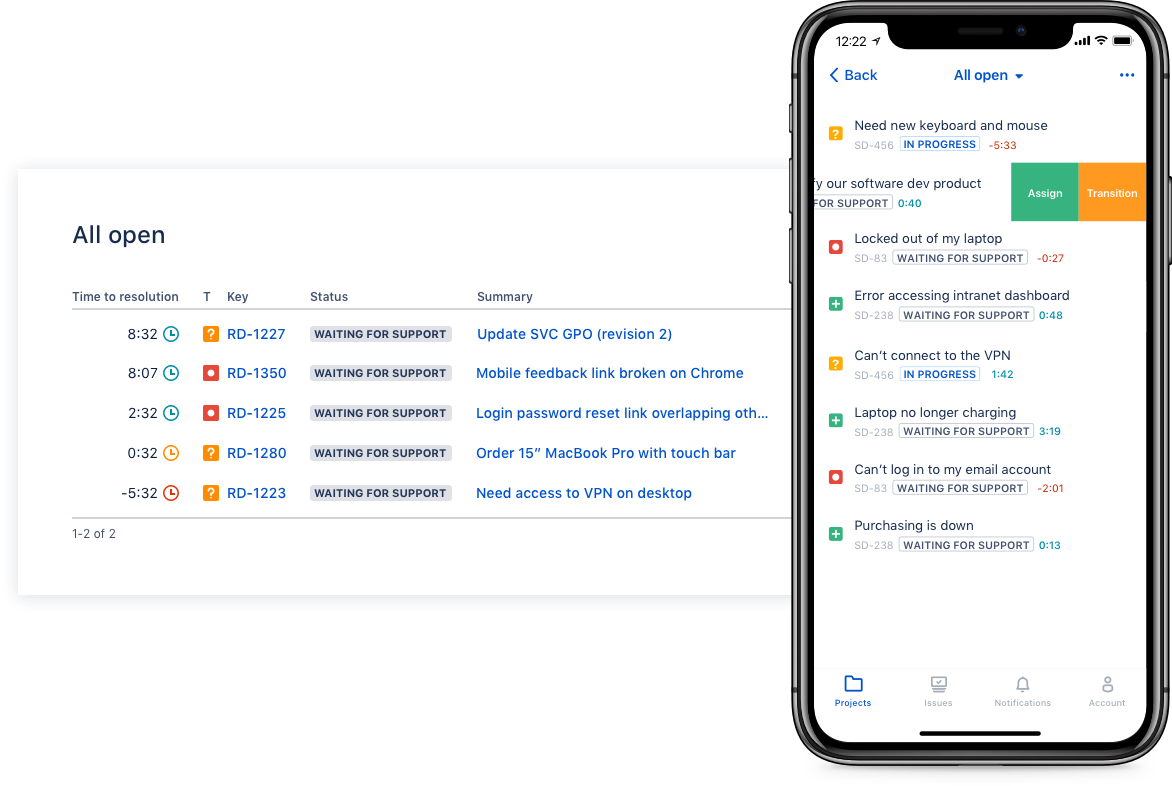
Jira Service Management (formerly Jira Service Desk, now including features from the former Mindville Insight, acquired by Atlassian in June 2020) is a service desk software that is purpose-built for IT, service, and support teams. The software provides everything IT and support teams need out-of-the-box for service request, incident, problem and change management. Jira Service Management integrates seamlessly with Jira Software so that IT and development teams can work better together. Users…
$0
per month
ManageEngine ServiceDesk Plus
Score 9.3 out of 10
N/A
ServiceDesk Plus is free help desk software from ManageEngine, a division of Zoho Corporation.
Jira Service Management is one of the strongest rival of Manage Engine Service Desk Plus. If we compare, both of them are really good for incident management and workflows. But when time to decide, Manage Engine Service Desk Plus is front of Jira Service Management with a few …
Verified User
Manager
Chose ManageEngine ServiceDesk Plus
We are actually moving away from ServiceDesk Plus to JIRA Service Desk. This is because of the flexibility that JIRA offers versus the more "locked in" fields in ServiceDesk. It also is going to allow us to better customize our requests and track our SLAs on different types of …
We use JIRA and Spiceworks in different departments in our company, but neither had the features we were looking for when it comes to end user facing help desk solutions. JIRA is great for our coding/development teams but it doesn't have the ease of use that service desk plus …
I think using a ticketing system is very easy to use and allows multiple teams to create help desks in the same portal. In terms of internal usage, I think this is a great option. However, suppose you're trying to keep internal items and external helpdesks in the same instance. In that case, this is not ideal, as there is no effective way to separate the two instances to protect internal data better.
ServiceDesk Plus is very easy to configure at the start, and then adjust the categories and rules as the implementation is refined. Its greatest strength is the ability to program without requiring a full time administrator. There is very little jargon involved. Reporting not so much. The canned reports are useful but do not always cover some of the basics. Fortunately, the user groups freely share report definitions so one could springboard from something close to your desired result.
Integration with many of the most common tools companies are using (Slack, MS Teams, Salesforce, ... etc)
Natural workflow with Jira (as product development / project management tool) which makes the full fix and follow up of the tickets / issues very easy to follow
Allow multiple different entry points and work flows for as many different needs your teams / company have
Ticket logging for end users, so they can see the progress on their help requests
Asset management; it has an agent that can be installed on machines which can then feed back information on installed software, active times, logged on user etc
Project management; larger projects can be managed within ManageEngine ServiceDesk as well as end user help tickets, where progress/milestones etc can be recorded
Active Directory import of users, so that it automatically updates when users are created/deleted and links their accounts in ManageEngine ServiceDesk with their email address as well to enable email alerts
When trying to select the top row ticket, you have to be careful not to select all tickets. Happened to us twice and we assigned all open tickets to one technician. Took a few minutes to correct.
Site is sometimes a bit sluggish to respond. Don't know if that is an issue with our network infrastructure or the program itself, though.
When users send emails to the help desk, we sometimes experience delays until the tickets appear on the site for the technicians.
In the current contect the requirments is around having a tool that is focused and can handle large ticket volumes and tracking incident, problem and user requests concerning end users. Jira has built in functionality to address the above practice needs faily easily and has a substantial amount of customizable reports for generating the relevant intelligence.
we are looking at other tools like Zendesk which may replace ServiceDesk. We are currently evaluating both tools to see which one would serve our needs better
If you're used to other tools in the Atlassian ecosystem, you'll feel right at home with JSM. It's also a platform that technical folk can easily pick up. However, I wouldn't recommend using JSM as a company's first jumping off point into Atlassian. There are a lot of other 'newer' tools that provide sleeker ITSM systems at a similar cost.
It is still very cumbersome, lots of data entry on the back end to build how we want it but it is still not completely user friendly. Many functions still dont work and contacting someone for help isnt always easy or we get told solutions for issues we have just arent built yet.
I gave JIRA a 9 rating since for me JIRA works according to its purpose. Since there is a customer portal, our clients can leave a comment or communicate with us using the PR ticket that way it is easier for us to also request any additional information we need for our investigation.
Our network administrator usually gets a good response when contacting ManageEngine ServiceDesk Plus customer service. They are quick to respond and so far have been able to eliminate most of our issues. We have been through several upgrades of the software over the years and have no issues to report in regards to customer service.
Zendesk is a similar ticketing system that our organization used before JIRA Service Desk. The main drawback of Zendesk was that it can only be used as a cloud service. This means that our company data would be living on the internet at the hands of their security team. Another drawback of this is the price is significantly more expensive rather than hosting it yourself. Zendesk does have some additional features such as commenting on multiple tickets at once that JSD does lack. However, switching to JSD was significantly more cost effective because we have the ability and the infrastructure to host our own ticketing system, something that Zendesk could not provide. Ultimatley switching to JSD saved us money and allows the ability for integration with all of the other Atlassian Suite products that we use on a day to day basis.
Spiceworks was free, which obviously had both benefits and limitations - I will say that the community around Spiceworks has always been great. If we could replicate that experience with the ME user base, it would be terrific.
The tool does not scale well from an ROI perspective. As you add a customer, you must add a new instance, hence a new license.
The tool is probably on the expensive side (34,000 USD per 130 technicians per year).
There is no usage beyond incident, change, and problem management. The CMDB feature is extremely limited and cannot generate additional ROI. There is no knowledge-base or integration with other software (other than ME Desktop Central).