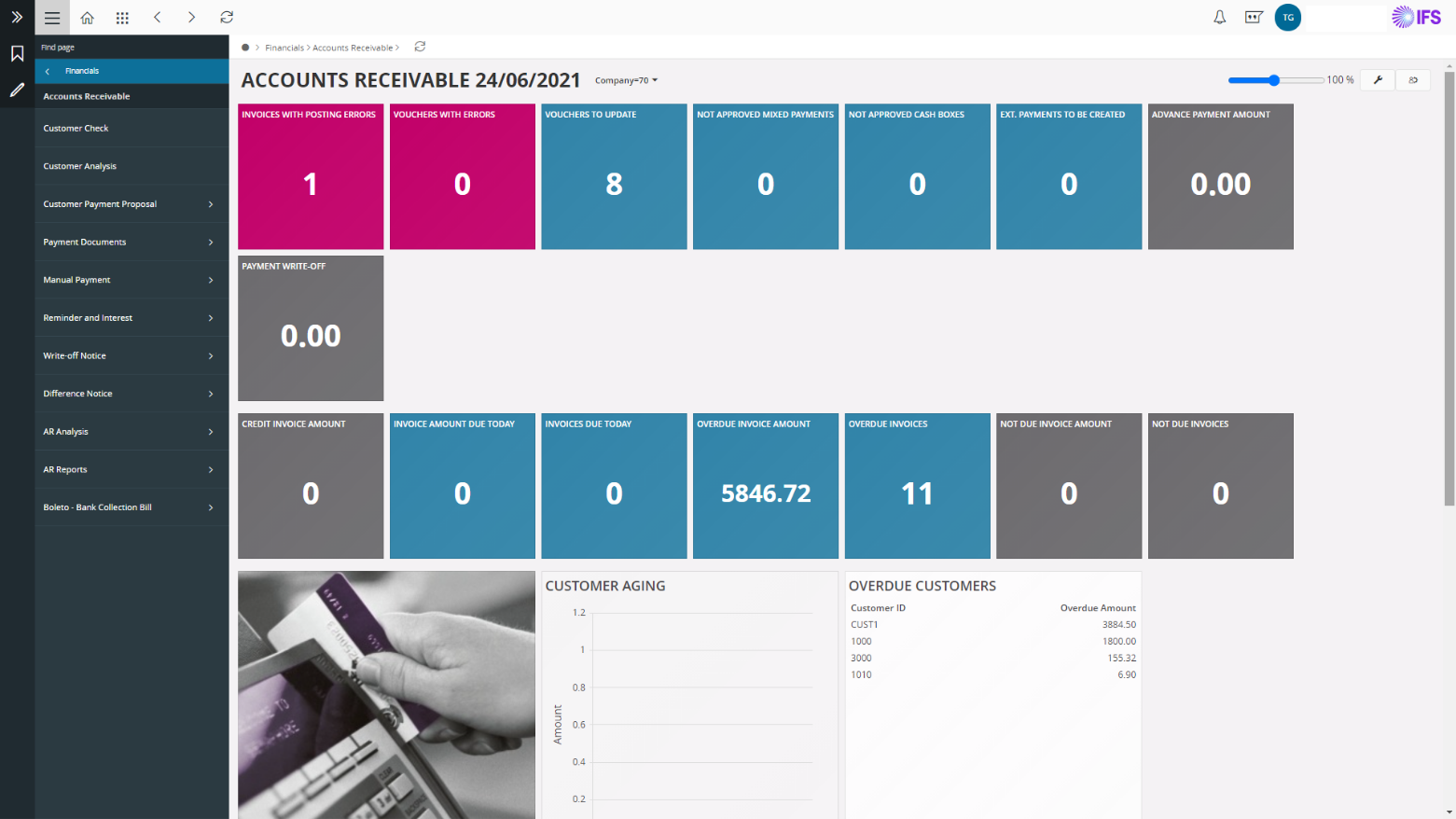
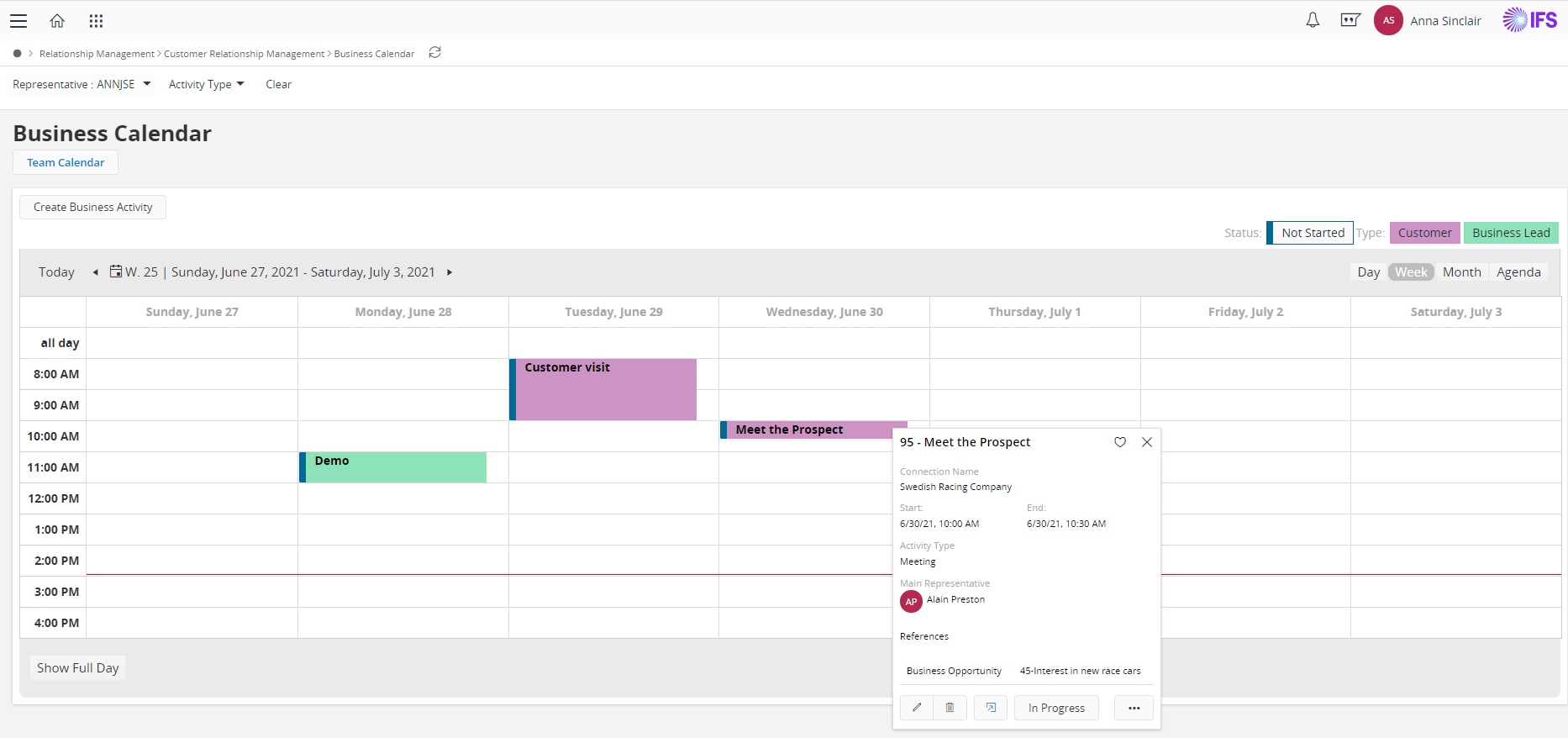
IFS Applications is presented by the vendor as an agile application suite that offers enterprise resource planning (ERP), enterprise asset management (EAM) and enterprise project management, handling 4 core processes: Service & Asset Management Full Enterprise Asset Management (EAM), Maintenance Repair and Overhaul (MRO) and Field Service Management (FSM) Manufacturing Enterprise Resource Planning (ERP) with support for process manufacturing, discrete manufacturing…
N/A
SAP Cloud ERP
Score 8.6 out of 10
N/A
SAP Cloud ERP (formerly SAP S/4HANA Cloud) is a modular ERP that enables users to run mission-critical operations in real time from anywhere, introduce new business models in any industry, and expand globally. SAP Cloud ERP is a SaaS product and can also be deployed in a hybrid landscape for quicker time to value. SAP Cloud ERP is a foundational component of the
IFS Applications have a very UI rich interface compared to other systems. IFS Applications can be easily and quickly learned with the very good documentation, e learning portals and other learning platforms. The technical implementation of the IFS Applications is very …
It ended up being a race between Dynamics and SAP. The superior SAP EWM was the final decider. In some areas, Dynamics outperformed SAP, especially on API maturity and integrations.
SAP S/4HANA Cloud is widely used ERP in the Market. The Brand has already gained a lot of trust from the customers across the world. It is easier to convince the new clients or customers to upgrade or migrate their non-SAP legacy system to SAP S/4HANA Cloud due to its extensive …
Order to cash processes and scenario are implemented natively in IFS. An HR module exists for career management also (objectives, comportments, training, mobility) but may be improved in terms of workflow validation (e.g. training to validate by a manager) or reporting.
Does well Manufacturing companies - E2E integration. Product Costing integration with manufacturing. Order to Cash - E2E integration, Joule, and openness to integrating third-party products. Less appropriate AI capabilities - competition is moving faster. E2E professional services business as business is evolving faster, and new ideas are coming in at a fast pace.
The software helps in forecasting and identifying potential challenges that would affect our organisation in the near future. This enables us to prepare in advance and also adopt practical and viable measures.
It enables faster and accurate data processing, which enhances decision-making.
It's easily customizable according to specific organizational needs. This promotes overall efficiency and productivity of the organization.
The cost of SAP as an ERP is quite high and the switching costs associated with ERP systems are even higher. That being said moving from one ERP to another only happens once in a great while for large organizations. Those switching costs include retraining, IT hardware requirements, outside consultants and more
Day to day data insight is more accurate for manufacturing industry to procure as per forecasted from supplier. Supply and fulfillment cycle becomes more easier. I would say more about performance as we are using this new server so we can see clear difference between SAP S/4HANA Cloud and ECC. Also it has customized business extensions for rapid development.
We have been unable to get answers to our questions, solutions to our problems, and they don't seem interested in working in the construction industry.
The support system I find great as whenever I run into problems they rectify them quickly as possible they never reacted late the support is just up to the mark for me. They provide many solutions to the problems I faced the [technical] team support is always amazing they [listen] to mean work accordingly.
SAP requires a lot of internal and external resources to complete its successful implementation. The cloud version requires a deeper understanding of the different capabilities of the local systems (hardware) and the connection towards your local IT team. We found several problems on our systems that we couldn't foresee before the implementation and roll out.
IFS Applications is based on Agile Technology which allows organizations to reconfigure user interface as per user requirements and make it user-friendly. Other applications are lagging on many fronts like User Interface, Online help document availability, Implementation methodology, and post-implementation expenses.
The platform utilizes advanced predictive analytics to anticipate operational bottlenecks and put them out of commission before the problems become larger. We can proactively develop effective strategies that help keep service quality in the face of unexpected changes in the market, or external disruptions, by continuously analyzing historical performance data as well as elements of the current market
Reporting is now centralized and managed. Previously, reports were outside the information systems and there was a risk of incoherence.
Accounting controls are now in place on the overall processes, including production, which helped the company to reduce closing periods or to produce more easily official mandatory accounting files yearly.
Interfaces between the CRM forecast tool and IFS helped to keep the tools in sync, and to decrease the processing times prior to production launch.